

News

News

The First Phase in the Architectural Design Process: A Program of Space Needs

What is Programming?
In the context of architectural study, programming is a crucial phase in the design process – taking place before any design work begins. At CNH Architects, the “Program of Space Needs” refers to the decision-making process that defines the scope of work to be designed. This essential process lays the groundwork for all subsequent phases, allowing architects to create spaces that are technically effective and visually attractive – all while aligning with the owners’ goals. With 50+ years of experience, our firm understands how each Program of Space Needs varies greatly and is specific to the type of project in which it serves. However, the general progression and objective remains the same.


Guiding Principles

Determining our “guiding principles” is step one of this process. As you may guess, guiding principles are the principles, or goals, that will guide the entire project going forward. In some cases, guiding principles may pre-exist, and if they do not, the team at CNH has developed a process for establishing them – beginning with broad words and terms – then refining each concept until they become more specific approaches.

From there, research requirements vary widely and are based on the individuality of each project. The research phase can range from simple yet effective conversations to measurable test formats that are enhanced using visual aids to convey data.
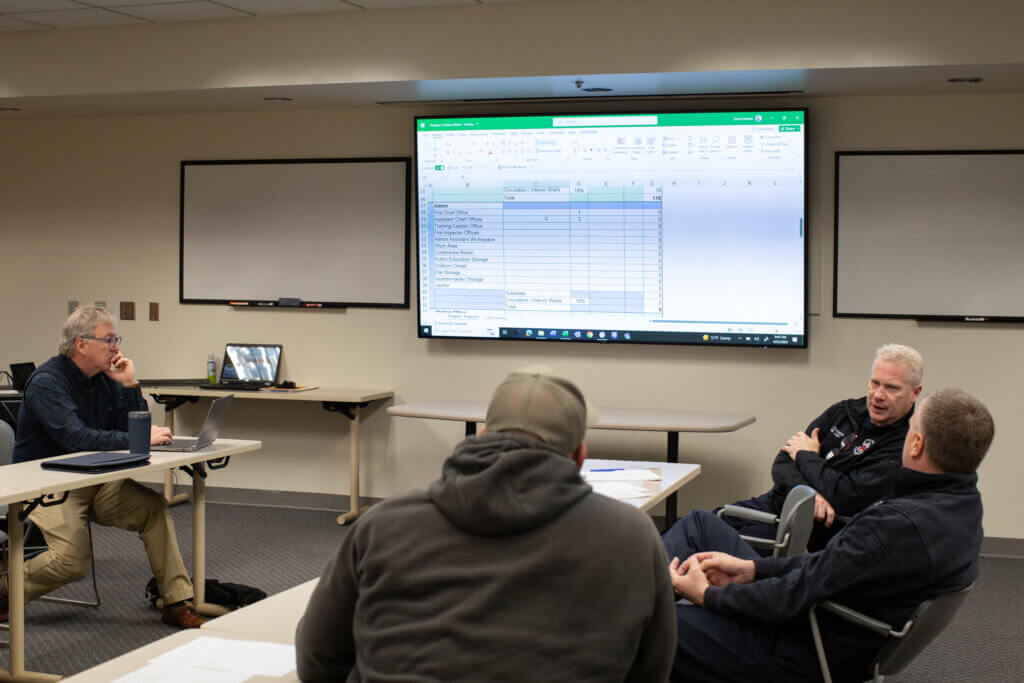
Quinn Hutson, Principal, leading a Study of Program Needs discussion with Fire Department personnel


Guided Discussions

When a project is open-ended, our team will often make discoveries alongside the client through a series of discussions. The architects at CNH understand that client education and guidance play the central role in successful programming, and that involvement is the key to programming commitments.


For example, with substantial fire station design experience, the team at CNH can bring expertise to guide this phase. This involves walking through a full array of both traditional and modern fire station design features that could be included in an ideal form. These features become the drivers in effectively communicating what is – and what is not – of top priority to the project team. This insight can also provide clarity surrounding the feasibility and budget for the fire station(s) and reinforces the guiding principles once again.


Programming to Establish Your Budget
Redesigning a project over and over as the requirements emerge, called “programming by design,” is inefficient and takes away time that could be spent making a design more technically effective. 1
Project definition is crucial for both owners and architects to understand the project’s purpose, scope, timetable, and very importantly – budget. By gathering and analyzing data early on, everyone can make more informed decisions, leading to a target square footage/building size, which is critical to proposing a budget. Additionally, the most cost-effective time to make changes is during the programming phase. In summary, the Program of Space Needs is essential for efficient decision-making, user-centric design, and building optimization, and to establish a budget. CNH Architects embraces programming techniques to carry forward your aspirations and objectives.


Headquartered in Apple Valley, MN – CNH Architects, Ltd. is a creative, service-oriented firm that provides innovative design solutions for the commercial building and retail areas, public sector clients, vehicle facility projects, daycare and animal care facilities. CNH has served clients in the Twin Cities and Upper Midwest since 1969.


1 Source: AIA The Architect Handbook of Professional Practice, Vol: 2

Share this:

The First Phase in the Architectural Design Process: A Program of Space Needs

What is Programming?
In the context of architectural study, programming is a crucial phase in the design process – taking place before any design work begins. At CNH Architects, the “Program of Space Needs” refers to the decision-making process that defines the scope of work to be designed. This essential process lays the groundwork for all subsequent phases, allowing architects to create spaces that are technically effective and visually attractive – all while aligning with the owners’ goals. With 50+ years of experience, our firm understands how each Program of Space Needs varies greatly and is specific to the type of project in which it serves. However, the general progression and objective remains the same.


Guiding Principles

Determining our “guiding principles” is step one of this process. As you may guess, guiding principles are the principles, or goals, that will guide the entire project going forward. In some cases, guiding principles may pre-exist, and if they do not, the team at CNH has developed a process for establishing them – beginning with broad words and terms – then refining each concept until they become more specific approaches.

From there, research requirements vary widely and are based on the individuality of each project. The research phase can range from simple yet effective conversations to measurable test formats that are enhanced using visual aids to convey data.

Quinn Hutson, Principal, leading a Study of Program Needs discussion with Fire Department personnel


Guided Discussions

When a project is open-ended, our team will often make discoveries alongside the client through a series of discussions. The architects at CNH understand that client education and guidance play the central role in successful programming, and that involvement is the key to programming commitments.


For example, with substantial fire station design experience, the team at CNH can bring expertise to guide this phase. This involves walking through a full array of both traditional and modern fire station design features that could be included in an ideal form. These features become the drivers in effectively communicating what is – and what is not – of top priority to the project team. This insight can also provide clarity surrounding the feasibility and budget for the fire station(s) and reinforces the guiding principles once again.


Programming to Establish Your Budget
Redesigning a project over and over as the requirements emerge, called “programming by design,” is inefficient and takes away time that could be spent making a design more technically effective. 1
Project definition is crucial for both owners and architects to understand the project’s purpose, scope, timetable, and very importantly – budget. By gathering and analyzing data early on, everyone can make more informed decisions, leading to a target square footage/building size, which is critical to proposing a budget. Additionally, the most cost-effective time to make changes is during the programming phase. In summary, the Program of Space Needs is essential for efficient decision-making, user-centric design, and building optimization, and to establish a budget. CNH Architects embraces programming techniques to carry forward your aspirations and objectives.


Headquartered in Apple Valley, MN – CNH Architects, Ltd. is a creative, service-oriented firm that provides innovative design solutions for the commercial building and retail areas, public sector clients, vehicle facility projects, daycare and animal care facilities. CNH has served clients in the Twin Cities and Upper Midwest since 1969.


1 Source: AIA The Architect Handbook of Professional Practice, Vol: 2

Share this:
Scroll to Top

BURNSVILLE FIRE STATION NO. 1

CNH’s largest fire station to date, the City of Burnsville’s Fire Station No. 1 is home to a crew of all full-time firefighters and more than 44,000 SF with 10 apparatus bays. Firefighter safety was one of nine top priorities for the station. Multiple contamination zones and a designated de-contamination area will allow firefighters to keep contaminated equipment and clothing in the apparatus bay until decontaminated. Another priority in the design was firefighter mental health. A warning system that slowly ramps up with alert tones and lighting while only alerting responding staff ensures firefighters are not awoken in an abrupt manner. The station includes areas for relaxation with different lighting to promote natural sleep rhythms, as well as a yoga studio and meditation garden. Extensive firefighter training features including Firefighter 1 and advanced training elements are another highlight of the station.