
News

News

The Fourth Phase in the Architectural Design Process: Construction Documents

What are Construction Documents?
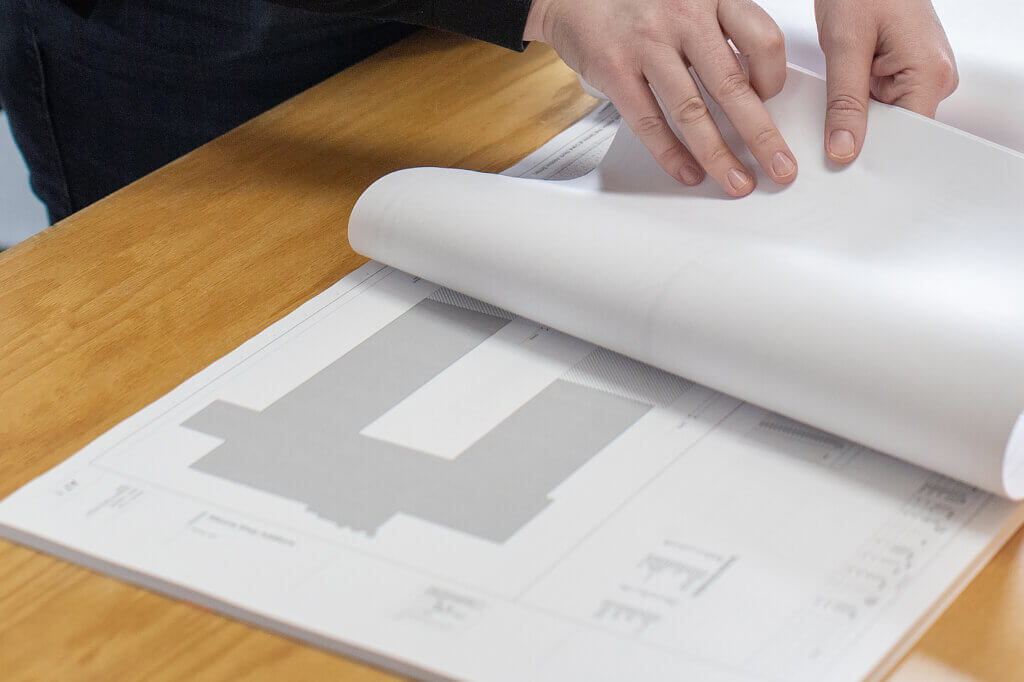
Once the detailed design has been established, the Construction Document (CD) phase can begin. CNH Architects and our engineers assemble the drawings, specifications, schedules, and details to make up the construction documents. We take pride in developing comprehensive documents with complete, clear information describing the systems and elements of the building to minimize contractor questions and uncertainty in bidding.


Quality Control

The design, refined during the Design Development phase, will be highly modeled in three-dimensions using Revit BIM software. In addition to the main architectural BIM model, the engineering disciplines also model their designs in Revit. This allows us to link them all together to create a comprehensive model from design development through construction document phases. The engineering consultants are required to build all elements as 3-D objects, including smaller items such as light fixtures, power outlets, plumbing faucets, HVAC grilles and structural trussing and braces. This level of detail allows for a high level of coordination between disciplines, ensures clearances for all trades, and validates visual elements of the design. In addition, CNH Architects will conduct collision detection and create visual cuts throughout the combined Revit model, including structure, mechanical, and electrical models near the completion of the project – to locate and eliminate overlapping or incorrectly located building elements. This final quality control step has shown to resolve many potential coordination items that would have been invisible in 2-D drafting.


Quality control during this phase will also include a final rechecking of the many building codes, accessibility requirements, NFPA and other standards that are applicable to the design as well as a review of client goals and decisions that have been documented during previous phases of the project.


Cost Precision

CNH Architects realizes the importance of developing a project to meet the owner’s budget. As in all previous phases, the cost estimate will be updated, adjusting for changes in systems, quantities, material costs or other bidding environment issues. We will complete this phase with a submittal of the completed contract documents for the owner and contractor to review, comment, and approve. Based on this feedback, the CD documents will be revised to incorporate any required revisions, preparing the final documents for bidding and construction.


Headquartered in Apple Valley, MN – CNH Architects, Ltd. is a creative, service-oriented firm that provides innovative design solutions for municipal and public, commercial, retail, vehicle, daycare, and animal care facilities. CNH has served clients in the Twin Cities and upper Midwest since 1969.

Share this:

The Fourth Phase in the Architectural Design Process: Construction Documents

What are Construction Documents?
Once the detailed design has been established, the Construction Document (CD) phase can begin. CNH Architects and our engineers assemble the drawings, specifications, schedules, and details to make up the construction documents. We take pride in developing comprehensive documents with complete, clear information describing the systems and elements of the building to minimize contractor questions and uncertainty in bidding.


Quality Control

The design, refined during the Design Development phase, will be highly modeled in three-dimensions using Revit BIM software. In addition to the main architectural BIM model, the engineering disciplines also model their designs in Revit. This allows us to link them all together to create a comprehensive model from design development through construction document phases. The engineering consultants are required to build all elements as 3-D objects, including smaller items such as light fixtures, power outlets, plumbing faucets, HVAC grilles and structural trussing and braces. This level of detail allows for a high level of coordination between disciplines, ensures clearances for all trades, and validates visual elements of the design. In addition, CNH Architects will conduct collision detection and create visual cuts throughout the combined Revit model, including structure, mechanical, and electrical models near the completion of the project – to locate and eliminate overlapping or incorrectly located building elements. This final quality control step has shown to resolve many potential coordination items that would have been invisible in 2-D drafting.


Quality control during this phase will also include a final rechecking of the many building codes, accessibility requirements, NFPA and other standards that are applicable to the design as well as a review of client goals and decisions that have been documented during previous phases of the project.


Cost Precision

CNH Architects realizes the importance of developing a project to meet the owner’s budget. As in all previous phases, the cost estimate will be updated, adjusting for changes in systems, quantities, material costs or other bidding environment issues. We will complete this phase with a submittal of the completed contract documents for the owner and contractor to review, comment, and approve. Based on this feedback, the CD documents will be revised to incorporate any required revisions, preparing the final documents for bidding and construction.


Headquartered in Apple Valley, MN – CNH Architects, Ltd. is a creative, service-oriented firm that provides innovative design solutions for municipal and public, commercial, retail, vehicle, daycare, and animal care facilities. CNH has served clients in the Twin Cities and upper Midwest since 1969.

Share this:
Scroll to Top

BURNSVILLE FIRE STATION NO. 1

CNH’s largest fire station to date, the City of Burnsville’s Fire Station No. 1 is home to a crew of all full-time firefighters and more than 44,000 SF with 10 apparatus bays. Firefighter safety was one of nine top priorities for the station. Multiple contamination zones and a designated de-contamination area will allow firefighters to keep contaminated equipment and clothing in the apparatus bay until decontaminated. Another priority in the design was firefighter mental health. A warning system that slowly ramps up with alert tones and lighting while only alerting responding staff ensures firefighters are not awoken in an abrupt manner. The station includes areas for relaxation with different lighting to promote natural sleep rhythms, as well as a yoga studio and meditation garden. Extensive firefighter training features including Firefighter 1 and advanced training elements are another highlight of the station.